|


Other LCF Group Sites


Land For Sale By Owner
in the Blue Ridge Mountains of Southwestern Virginia |
Authors
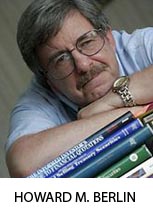 Howard M. Berlin is an electrical engineer with the Chemical Systems
Laboratory at Aberdeen Proving Ground, Maryland, and has been an
adjunct instructor in the Department of Electrical Howard M. Berlin is an electrical engineer with the Chemical Systems
Laboratory at Aberdeen Proving Ground, Maryland, and has been an
adjunct instructor in the Department of Electrical
Engineering at the University of Delaware. His experience has
primarily been in biomedical engineering research and physiological
instrumentation. He has taught several short courses for the
Department of the Army, several universities and conferences, and
graduate courses at the University of Delaware. He has authored a
number of governmental reports and articles in scientific and amateur
radio magazines. In addition, he is the author of the following books:
555 Timer Applications Sourcebook, With Experiments; Design of Active
Filters, With Experiments; Design of Op-Amp Circuits, With
experiments, and Design of Phase-Locked Loop Circuits, with
Experiments, all published by Howard W. Sams & Co,, Inc. He is
presently a member of Sigma Xi, IEEE, and the Delaware Academy of
Medicine. As an active ham radio operator, he can be heard using the
call letters W3HB, and was formerly K3NEZ.
WALDO T. BOYD
Waldo T. Boyd has an extensive background in electronics, industrial
management, writing and teaching. He has over 15 years of experience
in technical and industrial writing and editing. He has written
numerous magazine articles and several books and is a member of the
Author's League of America, Science Fiction Writers of America, and
the California Writers Club. He holds FCC first-class radiotelephone
and advanced-class radio amateur licenses. In writing this book, he
has also drawn on his experience as a certificated vocational
instructor.
E.G. BROONER
E.G. Brooner is a semi retired engineer who has had a lifetime
association with various branchesof the electronics profession ranging
from two-way radio communication to major military and
defense systems. Having majored in business management, his main
computer interest is business software and the application of
microcomputers to small business use. He has also been a college
programming instructor, and has authored three earlier books and
numerous magazine articles dealing with microcomputer applications.
The present book resulted when he found that potential users had many
questions about networks and very little available in the way
of answers.
MARVIN L. DE JONG
Dr. Marvin L. De Jong is Professor of Physics at The School of the
Ozarks in Point Lookout, Missouri. He received his A.B. degree in
physics from Hope College of Technology in 1960, and his Ph.D. in
radio astronomy from Rensselaer Polytechnic Institute in 1965. Dr. De
Jong has written a variety of papers that have been published in The
Astrophysical Journal, The Astronomical Journal, The American Journal
of Physics, The Physics Teacher, Computer Design, Kilobaud
Microcomputing, QST, Micro, and 6502 User Notes. He became interested
in microcomputers several years ago and he spent a sabbatical leave at
Virginia Polytechnic Institute and State University at Blacksburg,
Virginia, working with the editors of the Blacksburg Continuing
Education Series.
DR. JAMES M. DOWNEY
Dr. James M. Downey, a native of Indiana, received his Bachelor's
degree in Biology from Manchester College in 1967, and his Ph.D.
degree in mammalian physiology from the University of Illinois in 1970
where he was introduced to computers. Dr. Downey is a professor of
Medical Physiology at the University of South Alabama at Mobile where
he teaches both undergraduate and graduate students. His research
involves cardiac disease, and both microcomputers and minicomputers
play an important role in these investigations. He is an electronics
hobbyist and became interested in microcomputers when they first
became readily available. Dr. Downey has had articles published on
both his cardiac disease research and computer applications. His
hobbies include radio-controlled aviation, salt-water fishing, and
photography.
PAUL E. FIELD
Paul E. Field is a professor of physical chemistry at Virginia
Polytechnic Institute and State University. In addition to regular
lecture courses in chemistry, Dr. Field has taught college courses in
experimental methods of physical measurements for more than ten years
and, for the past few years he has presented a course in personal
computer interfacing for instrument and experiment automation. Paul
has also been teaching university extension workshop seminars for
academic, government, and industrial scientists and engineers since
1977. As a research chemist, his interest and scientific publications
have been in the area of chemical thermo-dynamics. For the past two
years, he has written a monthly column on Microcomputer Inter-facing
which appears in American Laboratory magazine and electronics trade
magazines in Australia, South Africa, and Switzerland.
JOHN PAUL FROEHLICH
John Paul Froehlich is an assistant professor in the Department of
Electrical Engineering at the University of Hartford, where he teaches
undergraduate courses in communication engineering, programming, and
microprocessor applications. He has written a book on communication
systems and an article for an encyclopedia. At several national
conferences, Mr. Froehlich has presented papers on solar data
acquisition systems and on low-cost development systems for teaching
microprocessor applications. His consulting services include a solar
controller, several data acquisition systems, remote readers for
monitoring utility uses, and computer software. He is a registered
engineer in Connecticut and is a member of the IEEE and the American
Society for Engineering Education.
RUSSELL M. GENET
Russell M. Genet was born and raised in southern California. As a
young boy, he enjoyed building radios, telescopes, and model rockets.
At 17, he joined the Air Force and served as an electronics technician
in North Africa and as an electronics instructor in Mississippi. After
receiving his electrical engineering degree from the University of
Oklahoma, he served as a missile guidance project officer. Currently,
Russ is an Air Force civil servant at Wright-Patterson AFB, where he
serves as director of a research section at the Human Resources
Laboratory. While Russ does fly small planes, and has an amateur radio
station (N8HH), his main hobby is astronomy. He is currently using a
TRS-80 in his back yard observatory to study eclipsing
binary stars.
PAUL F. GOLDSBROUGH
Dr. Paul F. Goldsbrough is a lecturer in the School of Applied Science
at Canberra College of Advanced Education, A.C.T., Australia.
Currently he teaches digital electronics and micro-
computer interfacing and applications at the graduate level, as well
as analog electronics and physics, including isotope technology, at
the undergraduate level. In 1977 he spent six months in the USA and
England working on educational techniques and application of
microcomputers. Since returning to Australia he has conducted a number
of three- and four-day short courses on microcomputers. His interests
include the development of educational equipments and the application
of microcomputers, particularly for systems control.
JOHN M. HOLLAND
John M. Holland is an independent consultant specializing in
industrial process control systems. He received his Bachelor of
Science degree in Electrical Engineering at Virginia Polytechnic
Institute in 1968. Before joining the US Army in 1969, he was involved
in developing flight control systems. During 1970, he served as a
communication officer in Vietnam. In recent years, John has
participated in the development of telemetry systems and fiber-optic
communications systems, including the use of microprocessors for the
process control of fiber fabrication. As a consultant, he has worked
with a wide variety of industrial processes. John holds patents in
radio telemetry, low-noise amplifiers, fiber-optic repeater design,
and laser stabilization. In addition, his papers have been published
in IEEE Transactions and numerous other trade journals. He has also
written Advanced 6502 Interfacing, published by Howard W. Sams and
Co., Inc.
STEVEN JONG
Steven Jong is a principal software technical writer for a major
computer vendor. He is involved in developing and documenting word
processing automation tools. He has both his Bachelor's
and Master's degrees from Boston University. Mr. Jong has had articles
published in Byte and Personal Computing. He is a member of the
Society for Technical Communication and the Boston Computer Society.
Mr. Jong's interests include music performance, programming, and
baseball.
STEPHEN D. KASTEN
Stephen D. Kasten is a chemist with the Tennessee Eastman Company in
Kingsport, TN. He has experience in the use of computers in laboratory
automation and he is now working on the
development and application of computer models for various chemical
processes. In this way, small-scale chemical systems are optimized for
later scale-up and commercialization. Steve's
main computer interests center on the 6502 and LSI-11 computer systems
and their interface circuits. Steve, his wife and three children have
lived in Kingsport since 1975. Mr. Kasten
graduated from the University of New Orleans with a BS in chemistry in
1974.
KEN KENECHT
Ken Kenecht is an experienced radio and television broadcast engineer
who became interested in computers with advent of the MITS Altair 8800
and purchased a very early model. He has
been working with Radio Shack TRS-80 since it was introduced. He is
presently an electronics instructor, freelance author, and freelance
broadcast engineer. He has written many articles for
most of the popular computer hobby magazines. Ken also writes software
for many local businesses in the Yuma, Arizona area and has several
programs in national distribution.
BARRY KLEIN
Barry Klein is currently an engineering technician. Previously Barry
worked for LH Research (power supply testing) and Music Man, Inc.
(guitar amplifier and special-effects device proto-typing). He plans
to develop a line of special effects for the guitar and other
equipment. He received an AA degree in Art from Saddleback Junior
College, Mission Viejo, California. In addition to his interests in
prospecting, racquetball, waterskiing, snow skiing, and
photomicrography, he is studying for a private pilot's license.
DAVID G. LARSEN
David G. Larsen is an instructor in the Department of Chemistry at
Virginia Polytechnic Institute and State University, where he teaches
undergraduate and graduate courses in analog and digital electronics.
He is coauthor of other books in the Blacksburg Continuing Education
Series and the monthly columns on microcomputer interfacing. He is a
co-instructor of a series of one-to-five-day workshops on the digital
and microcomputer revolution, taught under the auspices of the
Extension Division of the University, which attracts professionals
from all parts of the world.
VINCENT F. LEONARD, JR.
Vincent F. Leonard, Jr. is currently Associate Professor of Electrical
Engineering at Jamestown Community College, a State University of New
York campus. Prior to coming to Jamestown he served as Department
Chairman of the Aircraft Electronic Technology Program at the Academy
of Aeronautics (LaGuardia Airport, New York). Professor Leonard has
served as a consultant to local industries, has cosponsored several
microcomputer workshops in the Jamestown area, and is a member of ASEE.
EARLES L. MCCAUL
Earles L. McCaul is an electronic technician with the Laser Group at
Yuma Proving Ground, Arizona. He is also an adjunct instructor at
Arizona Western College where he teaches electronics and computer
science courses. Mr. McCaul is currently using computers for real-time
data collection and analysis of laser and digitally encoded
transponder systems. He is the founder and President of the Yuma
Computer Club and lectures on microcomputers and
programming. Mr. McCaul has also written government reports and
articles for technical magazines. He holds a Bachelor of Science
degree in Electronic Systems Design from Southern Illinois University
and is a member of the Society of Automotive Engineers and the IEEE.
His hobbies include automotive electronics, playing jazz guitar, and
working with microcomputers.
ELIZABETH A. NICHOLS
Elizabeth A. Nichols is a systems consultant with CENTEC Corporation,
Reston, Virginia, specializing in microelectronic applications to
energy and environmental problems. Dr. Nichols received a Ph.D. in
mathematics from Duke University in 1974.
JOSEPH C. NICHOLS
Joseph C. Nichols is a systems consultant with Network Analysis
Corporation, Washington, DC specializing in the analysis and design
communications networks and distributed systems. Dr. Nichols received
a Ph.D. in mathematics from Duke University in 1970.
DR. KEATS A. PULLEN, JR.
Dr. Keats A. Pullen, Jr. is a licensed professional engineer in the
state of Maryland and is a Life Fellow in the Institute of Electrical
and Electronics Engineers, Inc. He received a Bachelor of Science
degree in physics from the California Institute of Technology and a
Doctor of Engineering from Johns Hopkins University. Dr. Pullen taught
at Johns Hopkins University and the Pratt Institute of Brooklyn, and
has instructed as an adjunct professor at both the University of
Delaware and Drexel University. During this time, he wrote six books
and had many papers, articles, and reports published. He has also
contributed material for two handbooks and the Encyclopedia of Science
and Technology. Dr. Pullen has been an electrical/electronic engineer
at Aberdeen Proving Ground, Maryland, since 1946, and is presently
associated with the technical staff of the US Army Material Systems
Analysis Activity.
STEVEN M. ROGERS
Steven M. Rogers is a technical sales representative for the Eastman
Kodak Company. He currently specializes in the area of high-speed
computer-controlled automatic photographic printers and
negative-handling systems for the photofinishing industry. Mr. Rogers
has also
served as a service engineer, a technical instructor in the area of
digital logic and servicing of sequential- and random-access microfilm
image-retrieval equipment, and a technical editor. He has attended
California State College at Long Beach and the University of Alaska at
Anchorage.
PETER R. RONY
Peter R. Rony is Professor in the Department of Chemical Engineering
at the Virginia Poly-technic Institute and State University. Digital
electronics and microcomputers will play an increasingly important
role in process control, a subject of considerable interest to
chemical engineers. He is coauthor of the many other Bugbooks and
monthly columns on microcomputer interfacing that appear in American
Laboratory, Computer Design, Ham Radio Magazine, the German magazine
Elektroniker, and other US and foreign magazines.
LEO J SCANION
Leo J. Scanion is Documentation Manager for the Microelectronic
Devices business segment of Rockwell International, in Anaheim, CA. He
received his Bachelor of Science degree in Aero-nautical Engineering
from St. Louis University. He has done graduate studies in Electrical
Engineering and Computer Science at the University of California, in
Berkley, CA. Leo's experience includes technical writing in the
minicomputer and microcomputer industries, and engineering programming
in the aerospace industry. Before joining Rockwell International, he
served as Technical Publications Manager with Computer Automation,
Inc., in Irvine, CA. Mr. Scanion is also the author of 6502 Software
Design and a contributing author to 16-Bit Microprocessors, both
published by Howard W. Sams & Co. Inc.
NEIL SCIATER
Neil Sciater was an electronics technician in the US Navy and received
a BS degree from Brown University. He has also completed postgraduate
courses in electronics at Northwestern
University and in marketing at Babson College. His earlier
professional career includes experience as an industrial engineer, a
microwave component product engineer, and as an instrumentation
specialist on the staff of a Boston engineering consulting firm. Also,
Neil was formerly a regional editor for Electronic Design and an
electrical/electronics editor for Product Engineering. Mr. Sciater
writes professionally on electronics and electromechanical subjects
for several different internationally circulated publications. He is
also a consultant to industry in marketing and technical
communications with extensive experience in the preparation of
specifications, documentation, and technical presentation materials.
He is currently contributing feature articles specializing in basic
electronic components, sensors, and controls to various publications.
ANDREW C. STAUGAARD, JR.
Andrew C. Staugaard, Jr. is an experienced engineer/educator in the
field of microelectronics. He is presently Assistant Professor of
Electrical Engineering at Jamestown Community College,
a State University of New York campus. In 1977 he was the recipient of
the faculty Award for Excellence in Teaching at Jamestown Community
College. Prior to entering the education field, Professor Staugaard
was employed as a quality engineer in microelectronics processing by
the Bendix Corporation, Kansas City Division. He is coauthor of
monthly columns on the Motorola 6800 chip family that appear in
several US and foreign magazines.
ROBERT T. STONE
Robert T. Stone is the reactor supervisor of the Virginia Tech
Research Reactor. He was a nuclear instrumentation instructor in the
Navy. His current interest is in the use of analog and
microprocessor-based instrumentation. He is currently pursuing studies
at Stanford University as a National Science Foundation Graduate
Fellow. Bob is a member of IEEE, the American
Nuclear society, and several professional honor societies. As an
amateur radio operator, he can be heard using the call letters WB4YCB.
DR. CHRISTOPHER A. TITUS
Dr. Christopher A. Titus is a microcomputer applications engineer with
Tychon, Inc., in Blacks-burg, Virginia. He received his Ph.D. from
Virginia Polytechnic Institute while working on micro- computer
automated chemical instruments. he has co-authored a number of
instrumentation articles and has had papers presented at major
engineering and science conferences. Chris has programmed with the
Intel 8008, Intel 8080, and MOS Technology 6502 Micro-
computers. He has written editor, assembler, disassembler, and debug
software, as well as complete operating systems for microcomputers.
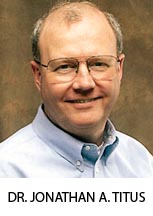 Dr. Jonathan A. Titus is the president of Tychon, Inc., in Blacksburg,
Virginia. Most of his current work involves technical writing and the
application of microcomputers for data acquisition and control. He has
written and coauthored a number of articles on computers for both
professional and popular applications. Jon's first microcomputer
experience was with 8008, and his Mark-8 computer was featured
as the first widely available hobby computer. He has co-instructed
courses with the American Chemical Society and now works with the
Tychon hardware and software programs. Dr. Jonathan A. Titus is the president of Tychon, Inc., in Blacksburg,
Virginia. Most of his current work involves technical writing and the
application of microcomputers for data acquisition and control. He has
written and coauthored a number of articles on computers for both
professional and popular applications. Jon's first microcomputer
experience was with 8008, and his Mark-8 computer was featured
as the first widely available hobby computer. He has co-instructed
courses with the American Chemical Society and now works with the
Tychon hardware and software programs.
PHIL WELLS
Phil Wells entered electronics as a "ham". Later, he worked his way
through college (University of California at Berkeley), designing and
fabricating printed circuits, and has been involved with computer
projects for the past 15 years. During his years in Silicon Valley, he
worked as a technician, engineer, project engineer, and manager. Mr.
Wells has designed equipment for processors ranging from the 4004 to
the Z80 and 6809. He has wide experience with computer
communication projects and did contract work for NASA in that field.
ROBERT J. WENZEL
Robert J. Wenzel studied electrical engineering at Ohio State
University and has an MBA from California Western University. He was,
in turn, Director of Data Processing at Fairfax Hospital, a Senior
Consultant to Systems and Computer Technology, Vice President,
Technical Development and Director of System Support for Intel
Corporation, and Vice President, Peripheral Products, at National
Advanced Systems. He has patents pending on magnetic disc storage
devices and is a member of the Society of Photo-Optical Engineers and
the Laser Institute of America.
EUGENE M. ZUMCHAK
Eugene M. Zumchak has his Bachelor's and Master's degrees from Cornell
University. He is currently president of a company engaged in
microprocessor system design consultation and training. His design
experience includes a wide range of both analog and digital
instrumentation. Mr. Zumchak has presented public microprocessor
courses from coast to coast and has conducted in-house training for
industry and government agencies. His interests include electronic
music, art and travel.
|
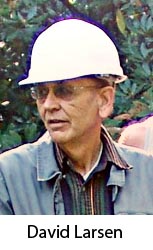 I
am using this website to make invitation to all authors and students
involved in the creation of the “BugBooks” and those associated with the
Blacksburg Group. I am David Larsen, retired instructor from Virginia Tech,
and one of the creators of the book series. I have been involved with
computers as an engineer, educator, and author for over 40 years. During
this time, I have been developing a historical collection of microcomputers
for a future museum. It is for this endeavor that I need your help: I
am using this website to make invitation to all authors and students
involved in the creation of the “BugBooks” and those associated with the
Blacksburg Group. I am David Larsen, retired instructor from Virginia Tech,
and one of the creators of the book series. I have been involved with
computers as an engineer, educator, and author for over 40 years. During
this time, I have been developing a historical collection of microcomputers
for a future museum. It is for this endeavor that I need your help:
It is my hope to organize both an online
“virtual” and real museum about the history of microcomputers and Bugbooks,
which later evolved into more than seventy books in the “Blacksburg
Continuing Education Series”, used in electronics and computer education. I
would also like to document the subsequent translation and out-of-country
distribution of these books.
You were impacted in some way by this book
series, and no doubt you have been instrumental yourself in the digital
revolution! Please give your perspective by completing the following short
survey:
INFORMATION GIVEN IN THIS SURVEY WILL NOT
BE SHARED OR USED BY ANY
OTHER PARTY
Bug Book Survey Form
(Click)
The BugBook Computer
Museum
In the future. It is now a matter of location,
the process of building, and time to develop exhibits of the caliber that
folks will want to come and see.
If you would like more information, David may be reached at 540-763-2321
evenings after 7:00pm.
|
More Information
Home Page
Bug Book
& Blacksburg
Continuing
Education Series
Authors
Book Titles
& Covers
Bug Book History Original Bug Book Series
Italian Book Series
Japanese Book Series
LCF Group Advertisers
The LCF Group provides management
services for several professional entities--
Meet the owners
 |